

Dice Mechanics
Wyrd oft nereð unfægne eorl, þonne his ellen dēah. “Fate often spares the hero not fated to die, when his courage holds.” — Beowulf
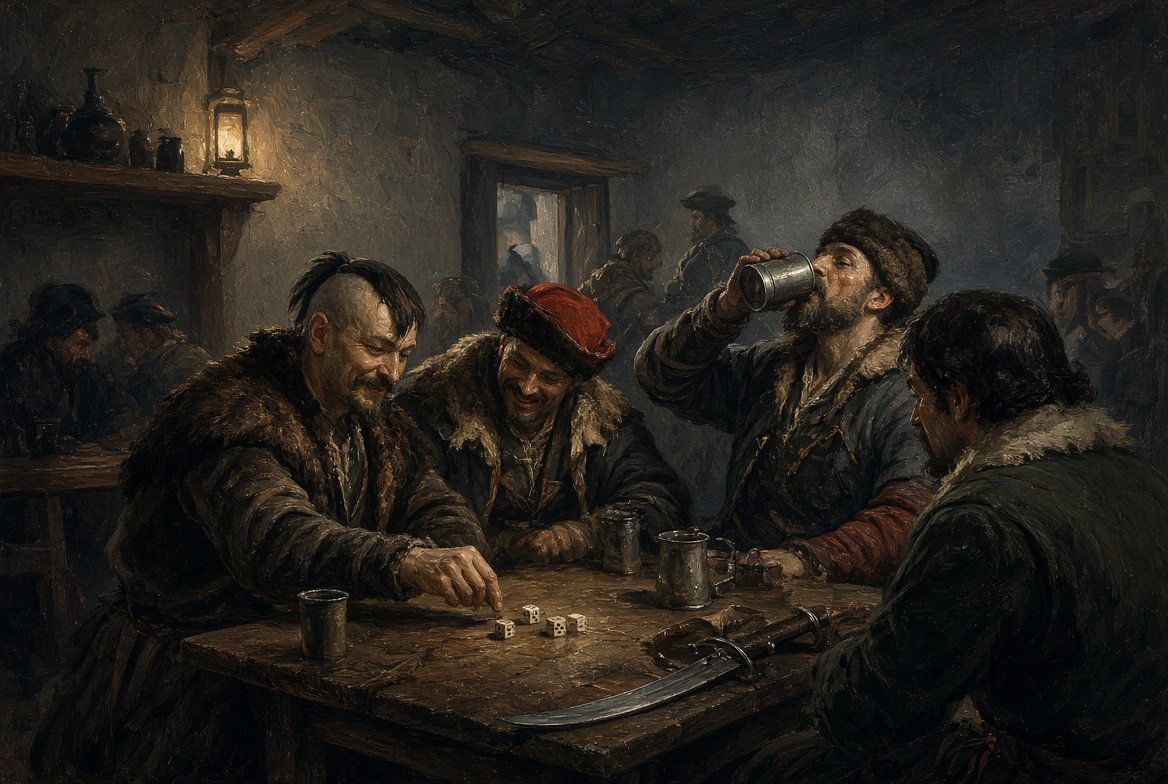
Similar to other TTRPGs, action resolution uses dice. When a player or Storyteller needs to resolve an action, they settle intent, then throw the appropriate dice. Very standard — so far.
This chapter is the door. The stack itself lives in the three that follow:
| Chapter | What it teaches |
|---|---|
| Marks & Tiers | Die types, Marks as information, Advantage / Disadvantage, how the pool is built |
| Omens & Consequences | The Omen d20 and side-events, independent of Marks |
| Tide | Collective pressure when a contest is larger than a clean 1v1 |
Player
Describe intent. Spend Exertion if you push. Read Marks as the Storyteller narrates them — not a hidden target number.
Storyteller
Name Foundation + Skill (or Primitive), declare die tier, interpret Marks and margins. No secret difficulty number to “clear.”
When to roll
Section titled “When to roll”If an action’s outcome can significantly differ because of luck, chance, or skill — the Storyteller can ask for a roll, picking the relevant characteristics to base it on. If the fiction is already clear, do not roll. Conversation, planning, and role-play are not replaced by dice.
The Storyteller always chooses which Foundation and (if any) Skill fit the described intent, and which die tier the pool uses — that tier is the mechanical face of Advantage and Disadvantage.
Related: Marks & Tiers, Omens, Tide.