

Resolution & Continuity
Harm
Deyr fé, deyja frændur, deyr sjálfur ið sama.
Cattle die, kinsmen die, you yourself will also die.
— Hávamál
Kodranni does not track hit points. It tracks the unravelling of the nine Foundations.
Harm is recorded on nine named tracks. Each track is permanently paired with one Foundation. Every point of Harm reduces that Foundation by one for dice purposes.
Physical
- Crushed ← Strength
- Bleeding ← Dexterity
- Fever ← Constitution
Mental
- Fog ← Intellect
- Disoriented ← Perception
- Shock ← Resolve
Social
- Tarnished ← Charisma
- Exposed ← Guile
- Disgrace ← Authority
- Tracks run from 0 to 3.
- Effective Foundation = max(0, Foundation − Harm points).
- Dice pools never drop below 1 die, regardless of Harm.
The Storyteller assigns points according to the fiction. The track name is only the mechanical label.
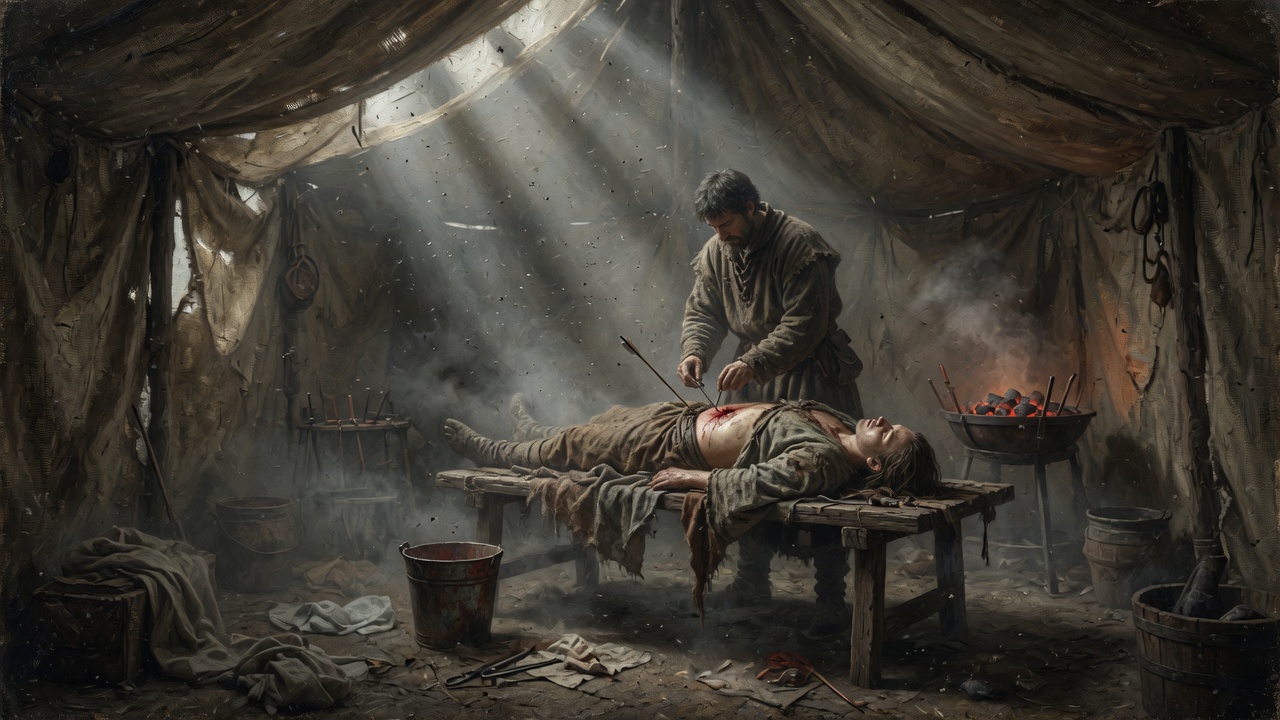
Inflicting Harm
Section titled “Inflicting Harm”Harm arises only when the fiction and the dice justify lasting damage.
| Roll type | Harm points |
|---|---|
| Opposed | Marks difference ÷ protection ratio (always floor) |
| Unopposed (falls, environment, dangerous acts) | (failures − Marks) ÷ protection ratio (always floor, minimum 0) |
Protection ratios
| Protection | Ratio |
|---|---|
| No armour / no relevant Reputation | ÷1 |
| Light armour / moderate Reputation advantage | ÷2 |
| Heavy armour / strong Reputation advantage | ÷3 |
- The Storyteller chooses the Harm track when fiction is ambiguous.
- No mixed events: a given infliction is physical or social/mental — not both stacked. Physical protection uses donned armour (None / Light / Heavy). Social and mental protection uses Reputation (relative Hierarchy position). Maximum Reputation gap for ratio purposes is two tiers (e.g. Ruler against Outcast).
Be frugal. Most successful hits produce 0 or 1 point. Two points is notable. Three in a single exchange is rare.
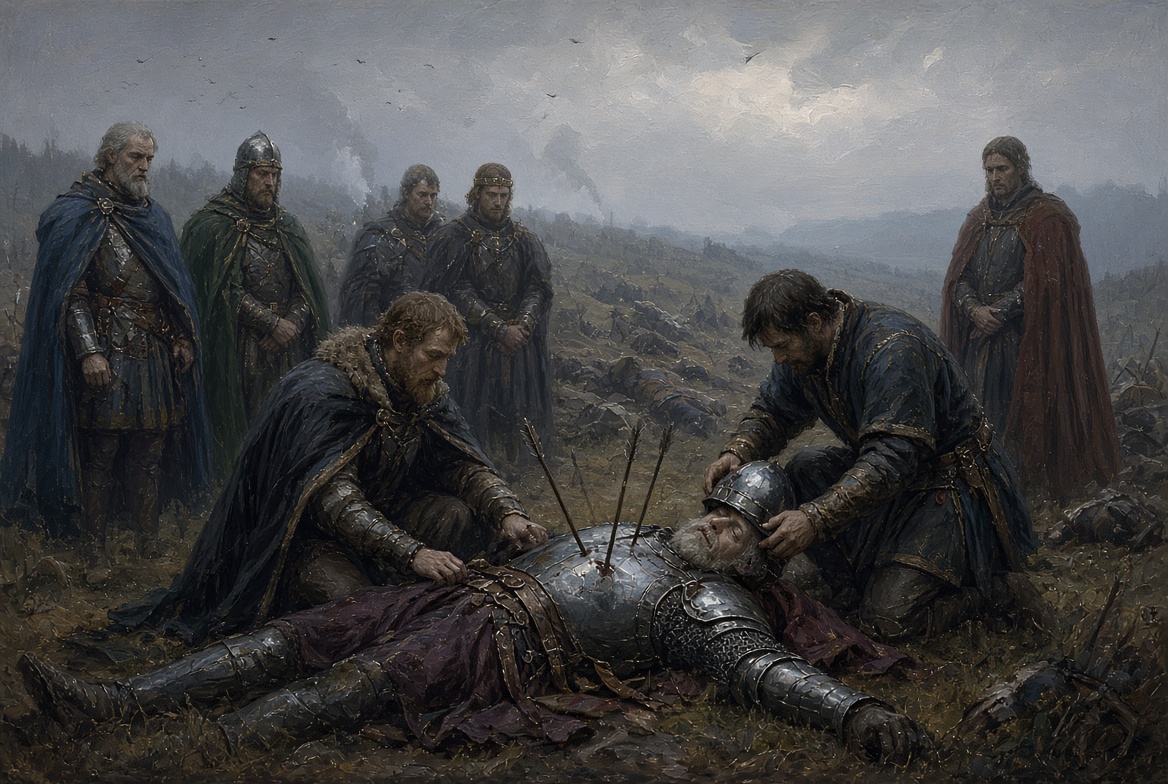
When any Harm track reaches 3, the character is Dying.
- While Dying, every roll requires Exertion.
- When Exertion reaches 0, the character dies.
This window allows final actions, last words, or desperate stabilisation. Stabilisation requires a successful Healing attempt and removes the Dying state; the track remains at 3 until further recovery, and almost always leaves a permanent Trait.
Healing is not a superpower. Without the right knowledge and material — Herbalism, bandages, Handcrafting for a splint, and whatever else the wound actually needs — treat the attempt as Disadvantage. Even with the best care, sometimes there is nothing left to do. Fight on. Save who you can. There is no plot armour. Death takes everyone in the end.
After death: remove the character from the Hierarchy Diagram. Continuity continues through Echoes and Legacies. Play does not stop mid-session for full character replacement.
Recovery
Section titled “Recovery”Recovery is slow and depends on rest, care, and nourishment.
| Condition | Effect |
|---|---|
| Short rest | May clear 1 point from a single track if fed and tended |
| Long rest | May clear 1–2 points depending on care, shelter, and food |
| No food or water | Reduces or negates recovery |
| Track at 3 | Can only be reduced after Dying has been stabilised |
Inventory (bandages, herbs, clean water, shelter as fiction) and rest quality matter. The Storyteller judges what the situation allows.
Worsening and Omens
Section titled “Worsening and Omens”All Harm can worsen.
The Storyteller may load custom Omen faces for infection, secondary bleeding, spreading fever, growing shame, and similar deterioration. When those faces appear, additional Harm applies. Positive Consequences may reduce or prevent Harm.
Ordinary faces 7 and 13 remain available for the same purpose at the Storyteller’s discretion.
Related: Dice Mechanics, Exertion, Hierarchies, Automation.